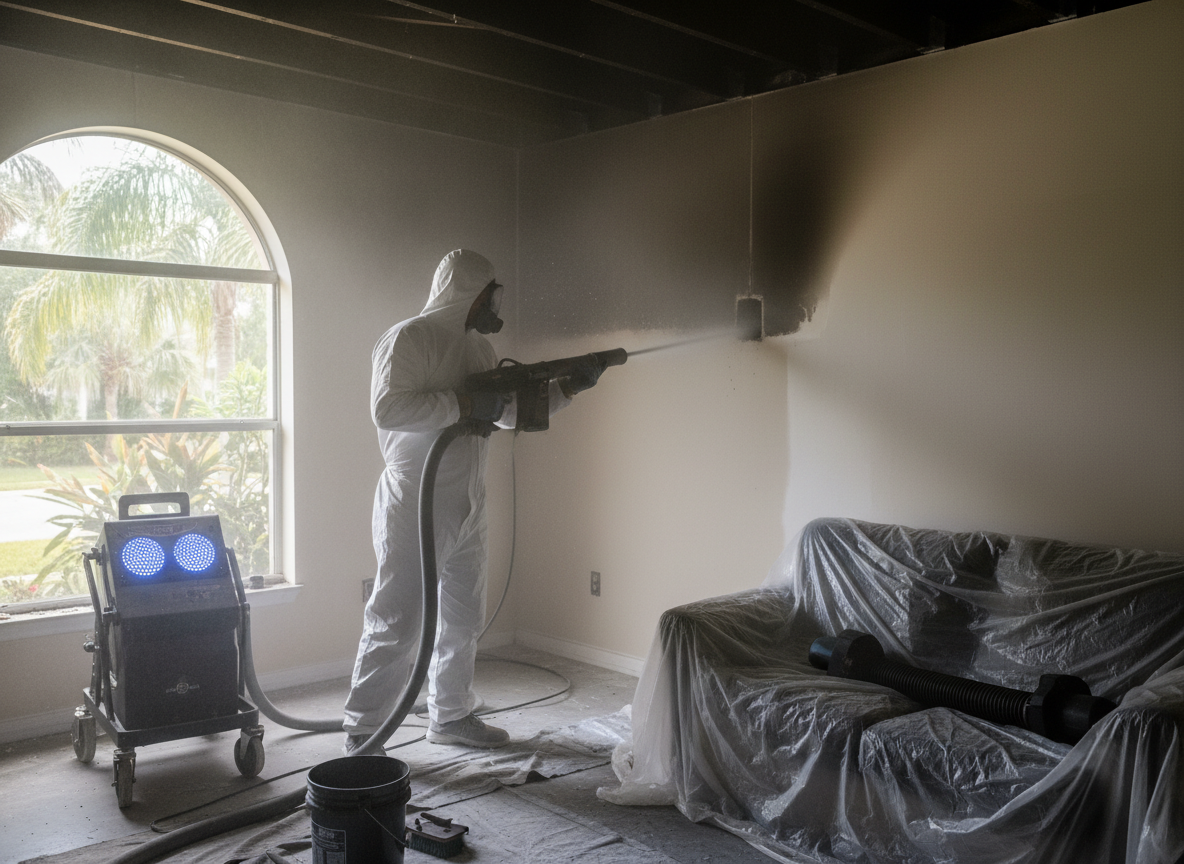
St. Petersburg’s older wood-frame and plaster homes, especially those built before 1960 in areas like Kenwood and Historic Old Northeast, allow smoke to travel through wall cavities and settle into lath and plaster. Porous materials such as drywall, insulation and hardwood floors absorb acidic soot that continues to off-gas if left untreated. Technicians must test surfaces for pH levels before applying neutralizers, because Florida’s high humidity accelerates corrosion on metal fixtures and HVAC coils when acidic residue remains.
Smoke from kitchen or electrical fires often migrates through the shared ductwork common in mid-century ranch homes south of Central Avenue. Residue coats blower wheels and evaporator coils, creating persistent odors that standard air fresheners cannot remove. Proper cleaning requires removing registers, brushing ducts, and applying EPA-registered encapsulants rather than ozone generators alone, which can damage rubber components in older systems.
After any fire involving synthetic furnishings or wiring, technicians check for heavy metals and plastic residues that settle on contents. These particles require HEPA vacuuming followed by specialized solvent cleaning rather than water-based methods that can set stains permanently. Disposal follows Pinellas County solid-waste rules for contaminated construction debris to avoid improper landfill mixing.
Technician insight
In St. Petersburg the thing that catches most people out with smoke damage is how quickly soot penetrates the plaster and lathe in pre-1960 bungalows once humidity spikes after a storm. Homeowners try wiping surfaces themselves and end up driving the acidic residue deeper into the wood framing, which then requires opening walls we would otherwise have left intact.
Kenwood Bungalow Kitchen Fire
Smoke from a stove fire traveled through wall cavities into bedrooms of a 1952 wood-frame home. Inspection showed soot coating inside HVAC returns and settled on plaster ceilings. Crews contained the space, cleaned ducts, neutralized surfaces with pH-adjusted solutions, and sealed remaining odor sources. The family returned within four days with no recurring smell.
Smoke Damage Removal Services We Offer
✓Soot Removal From Drywall and Plaster
Removes embedded acidic soot from interior walls and ceilings using pH-neutral cleaners and HEPA filtration to prevent ongoing odor and corrosion in older St. Petersburg homes.
✓HVAC System Smoke Cleaning
Cleans ducts, coils and blower assemblies where smoke travels through shared systems common in mid-century Pinellas County residences, restoring airflow and eliminating hidden odor sources.
✓Odor Neutralization Treatments
Applies thermal fogging and encapsulant sealers to neutralize smoke molecules trapped in porous materials after fires in humid St. Petersburg conditions.
✓Contents and Belongings Restoration
Cleans, deodorizes and restores furniture, clothing and household items affected by smoke, separating salvageable pieces from those requiring disposal under local waste guidelines.
✓Structural Deodorization
Treats subfloors, attics and crawl spaces where smoke settles in older wooden structures throughout Kenwood and surrounding neighborhoods.
Smoke Damage Removal Cost in St. Petersburg, FL
| Service | Typical Range | What Affects It |
|---|---|---|
| Initial Assessment and Containment | Free | 24/7 response to any St. Petersburg address |
| Soot Removal from Walls and Ceilings | $1,200–$3,500 | Depends on home age and square footage affected |
| HVAC Duct and Coil Cleaning | $600–$1,800 | Higher in homes with shared or older duct systems |
| Full Odor Neutralization Package | $800–$2,200 | Includes thermal fogging and sealing of porous materials |
Ranges are typical for St. Petersburg, FL and confirmed with an exact written quote before any work starts.
How it works
- 1
Site Assessment
Inspect all affected rooms, test surface pH, and map smoke migration paths through walls and HVAC in the specific St. Petersburg property.
- 2
Containment and Ventilation
Isolate work zones with plastic barriers and set up negative air machines to prevent soot spread to unaffected areas.
- 3
Cleaning and Treatment
Apply specialized cleaners, HEPA vacuum surfaces, and treat with odor neutralizers suited to Florida humidity.
- 4
Final Verification
Re-test surfaces and air quality before returning the home to normal use.
Pricing
Upfront quotes provided after on-site assessment; costs vary with square footage, material types and HVAC involvement.