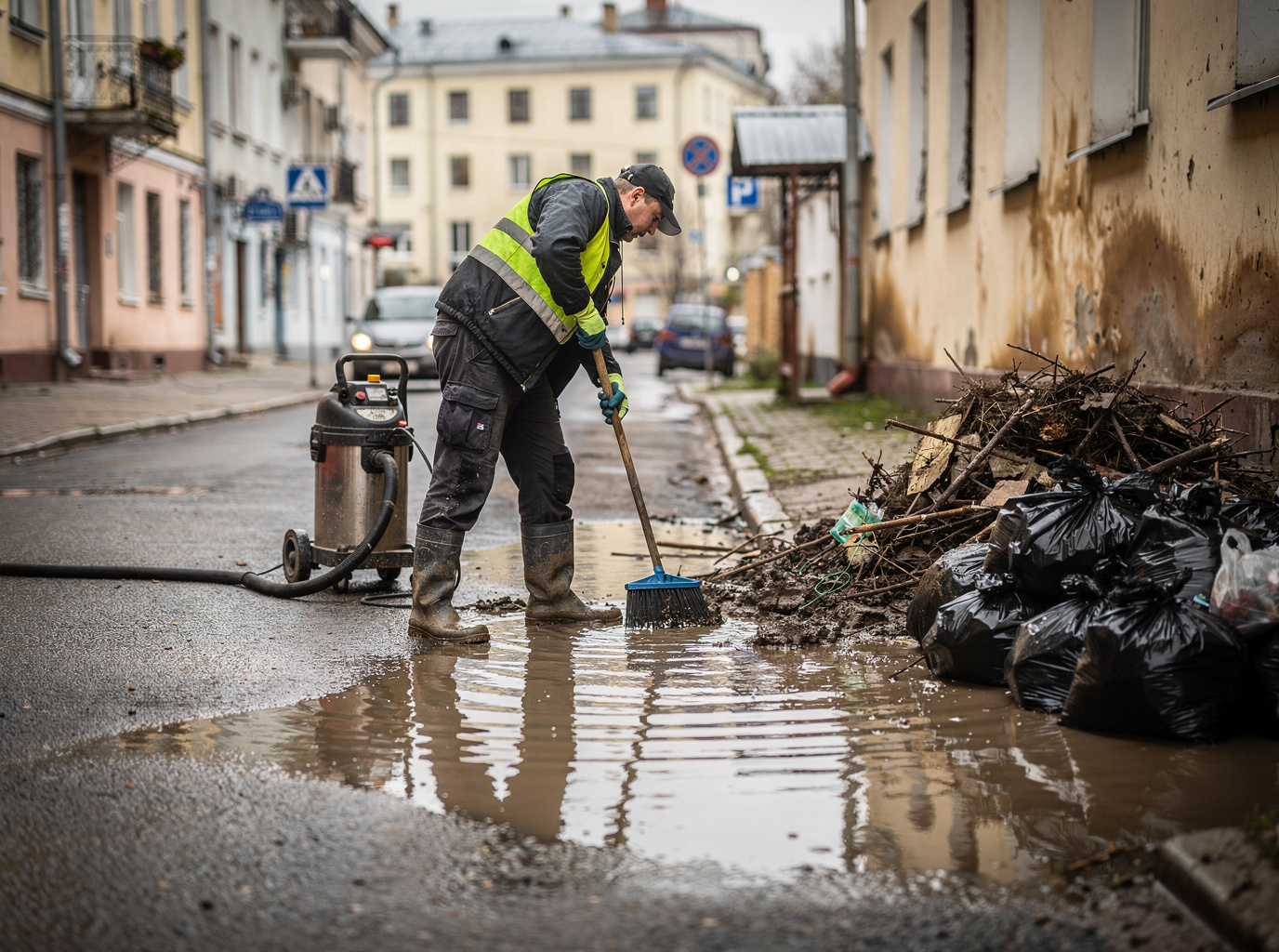
St. Petersburg sits on a peninsula with a high water table and flat terrain that lets storm water pool quickly against slab foundations common in mid-century homes. When floodwater enters from Tampa Bay or heavy summer rains, it often carries salt and sediment that corrodes baseboards and subfloors faster than freshwater. Crews must pull carpet and padding within hours and use moisture meters on concrete slabs to locate trapped water that later feeds hidden mold growth behind cabinets.
Pinellas County building codes require proper disposal of contaminated flood debris, especially after sewage backups common in older neighborhoods like Kenwood and Historic Roser Park. Technicians separate Category 3 water from cleaner sources and document moisture levels at multiple depths because slab-on-grade construction hides saturation under tile. Without this step, homeowners face recurring musty odors once humidity spikes again in late summer.
Saltwater intrusion from bay flooding demands different drying protocols than inland rain events. Equipment placement accounts for the narrow setbacks and mature landscaping typical of St. Petersburg lots so that air movers do not disturb established root systems while still achieving targeted airflow under vanities and inside wall cavities.
After extraction, crews run dehumidifiers sized for the square footage and local dew points that routinely exceed 75 degrees, preventing secondary damage to plaster walls found in pre-1970 homes. Final clearance checks include both visual inspection and moisture readings to satisfy insurance adjusters who know the area’s repeated flood patterns.
Technician insight
In St. Petersburg the thing that catches most people out with Flood Cleanup is how quickly saltwater from a bay surge wicks up into the bottom inch of drywall on slab homes; if you do not cut that drywall the same day, the corrosion and mold start behind the baseboards before the insurance adjuster even arrives.
Bay Drive Flood After Tropical Storm
Heavy rain and surge pushed several inches of brackish water into a 1960s ranch near Bay Pines. Extraction removed the standing water and salt-laden sediment from under kitchen cabinets. Targeted drying focused on the slab edge and wall cavities; final readings allowed the owners to begin repairs without hidden moisture issues weeks later.
Flood Cleanup Services We Offer
✓Storm Surge Extraction
Removes saltwater pushed inland from Tampa Bay during hurricanes and tropical storms before it damages slab foundations and electrical systems.
✓Sewage Backup Cleanup
Handles contaminated water from overwhelmed municipal lines common in older St. Petersburg neighborhoods after heavy rainfall.
✓Flooded Crawl Space Drying
Extracts standing water and installs targeted drying in vented crawl spaces found under many mid-century homes near Mirror Lake and Crescent Lake.
✓Post-Flood Mold Containment
Sets up barriers and negative air to stop mold spores from spreading in humid conditions that follow every major rain event in Pinellas County.
✓Emergency Water Removal
Provides immediate pumping and extraction for homes hit by flash flooding along 4th Street corridors and low-lying areas near the bay.
Flood Cleanup Cost in St. Petersburg, FL
| Service | Typical Range | What Affects It |
|---|---|---|
| Initial extraction visit | $450–$900 | Varies with depth and whether sewage or saltwater is involved |
| Daily drying equipment | $250–$600 | Based on home size and number of dehumidifiers required |
| Crawl space flood job | $800–$1,800 | Higher when access is limited or multiple drying zones needed |
| Storm surge cleanup | $1,200–$3,000 | Saltwater jobs require extra corrosion protection steps |
Ranges are typical for St. Petersburg, FL and confirmed with an exact written quote before any work starts.
How it works
- 1
On-Site Assessment
Technicians arrive within hours, map water depth, test for contaminants, and note construction details such as slab edges and wall cavities typical in St. Petersburg homes.
- 2
Water Extraction
Industrial pumps and wands remove standing water while separating sewage or saltwater from cleaner sources to meet local disposal rules.
- 3
Drying and Dehumidification
Air movers and commercial dehumidifiers run until moisture meters read within acceptable range for concrete and wood in the area’s high-humidity climate.
- 4
Final Clearance
Visual inspection plus documented moisture readings confirm the structure is dry before any reconstruction begins.
Pricing
Pricing depends on water category, affected square footage, and whether saltwater or sewage is present.