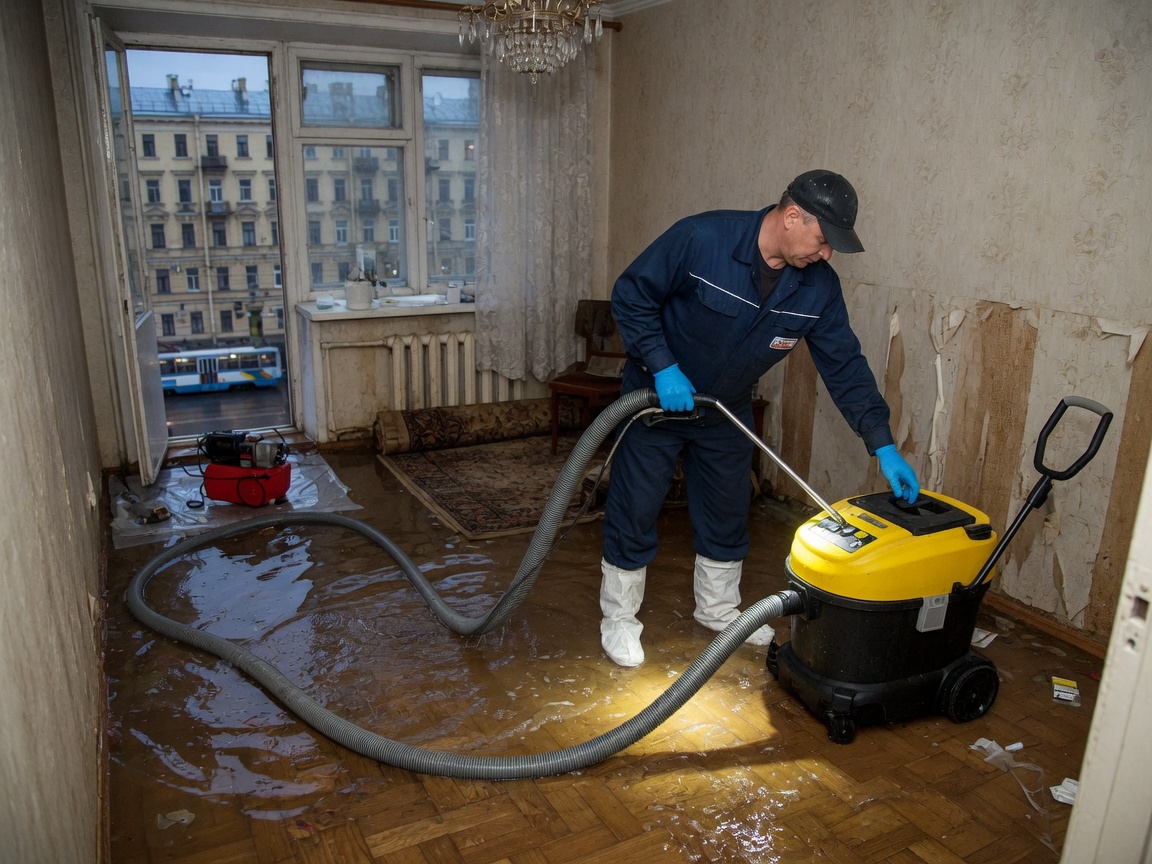
St. Petersburg's older housing stock in neighborhoods like Old Northeast and Kenwood often features slab foundations and outdated plumbing that lets water travel under tile or into wall cavities during heavy summer thunderstorms. Extraction crews must pull standing water within hours because the area's high humidity and frequent afternoon rains slow natural evaporation and push moisture into subflooring. Technicians use truck-mounted pumps and moisture meters to reach water trapped behind baseboards or in HVAC ducts common in mid-century homes.
Pinellas County terrain is mostly flat with a shallow water table, so even moderate rainfall can back up through floor drains in downtown St. Pete commercial buildings or single-story residences near the bay. Extraction work here frequently involves separating clean water from Category 3 contaminants after sewage overflows or storm surge, requiring containment barriers and proper disposal at approved sites. Crews also check for hidden saturation in insulation and under cabinets that homeowners miss, preventing later mold issues that spread quickly in Florida's climate.
After extraction, crews document moisture levels in multiple rooms because St. Petersburg building codes require thorough drying before any reconstruction in rental or commercial properties. Equipment placement must account for narrow hallways in historic bungalows and limited electrical access during outages following tropical storms. Skipping these steps leaves residual water that reappears weeks later when humidity spikes again.
Technician insight
In St. Petersburg the thing that catches most people out with Emergency Water Extraction is how quickly water moves under the slab in 1950s-1970s homes once the water table rises after a thunderstorm; if crews do not pull it from the edges first the moisture just travels to the next room.
Old Northeast Bungalow After Heavy Rain
Water entered through a cracked slab joint during an afternoon storm and spread under hardwood floors. Extraction crews mapped the migration path with meters, removed standing water from three rooms, then ran drying equipment for four days until readings stabilized. The homeowner avoided mold growth that commonly appears in similar properties when moisture is left behind.
Emergency Water Extraction Services We Offer
✓Flood Water Extraction
Removes standing water from storm or rainfall flooding in St. Petersburg yards and interiors before it reaches foundations.
✓Burst Pipe Water Removal
Extracts water from sudden pipe failures common in older Pinellas County plumbing, protecting floors and walls from saturation.
✓Storm Surge Extraction
Handles saltwater intrusion after coastal storms affecting homes near St. Petersburg's waterfront neighborhoods.
✓Sewage Backup Extraction
Safely removes contaminated water from drain backups that occur during heavy rains in flat areas of the city.
✓Appliance Leak Extraction
Clears water from washing machine or water heater failures that pool in utility rooms of mid-century St. Pete homes.
✓Roof Leak Water Removal
Extracts rainwater that enters through damaged roofs during hurricane season and collects in attics or ceilings.
Emergency Water Extraction Cost in St. Petersburg, FL
| Service | Typical Range | What Affects It |
|---|---|---|
| Initial Extraction Visit | $250–$600 | Varies with water depth and number of affected rooms in older homes |
| Additional Extraction Hours | $150–$300 | Added when water has migrated under slabs or into multiple levels |
| Moisture Mapping & Monitoring | $200–$450 | Daily checks required in high-humidity St. Petersburg summers |
| Contaminated Water Disposal | $300–$700 | Higher for sewage or storm surge jobs near the bay |
Ranges are typical for St. Petersburg, FL and confirmed with an exact written quote before any work starts.
How it works
- 1
On-Site Assessment
Technicians arrive within hours, inspect affected rooms in St. Petersburg properties, and identify water migration paths through slabs or walls.
- 2
Standing Water Removal
Truck-mounted pumps and portable extractors pull visible water from floors and carpets while protecting unaffected areas.
- 3
Hidden Moisture Detection
Infrared cameras and meters locate trapped water in subfloors and insulation typical of older Pinellas County construction.
- 4
Drying and Monitoring
Air movers and dehumidifiers run until readings reach safe levels, with daily checks to prevent mold in humid local conditions.
Pricing
Costs depend on water volume, access difficulty, and whether contamination is present; upfront quotes provided on arrival.