2026-10-10 · Tom Henderson
Factors That Influence Water Damage Restoration Costs in St. Petersburg
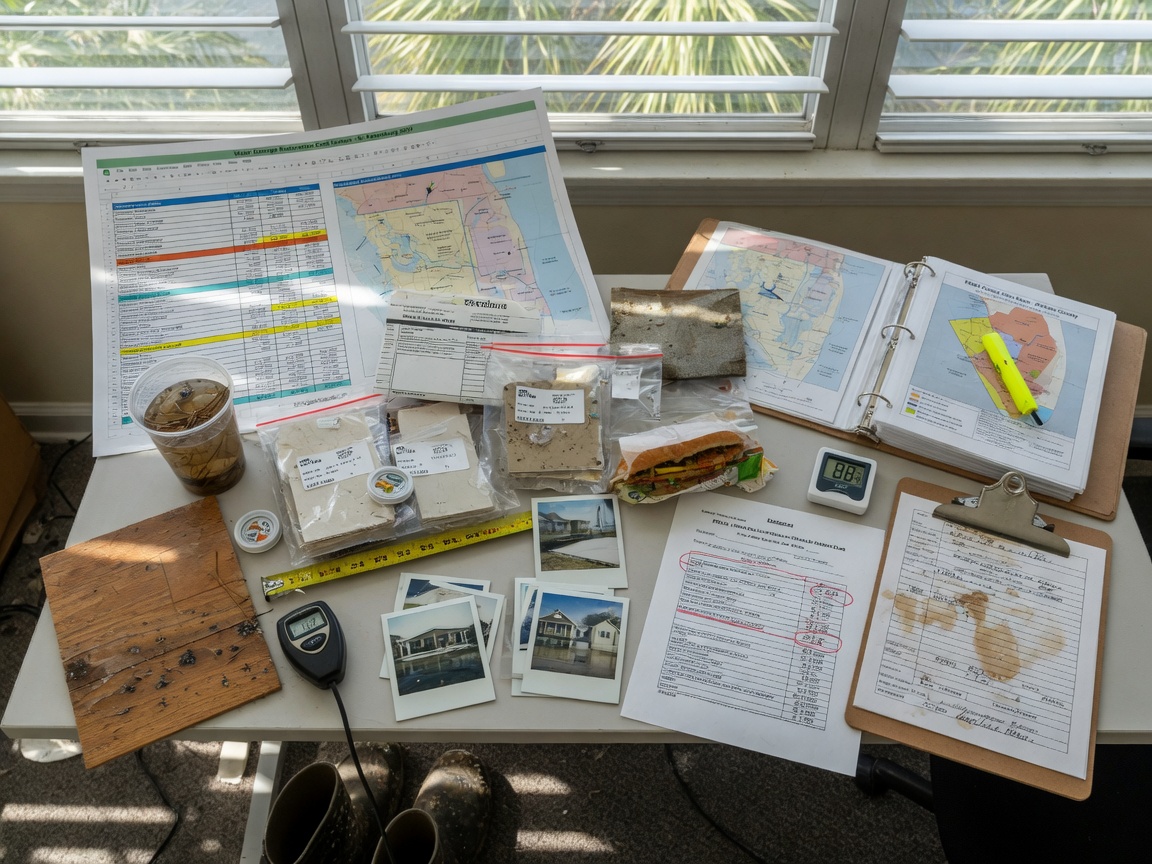
Water damage restoration costs in St. Petersburg are driven first by the square footage involved, the category of water, and the construction details of the home. Older properties in Pinellas County often feature plaster walls, slab foundations, and limited crawl spaces that increase both labor and material removal expenses once water migrates under flooring.
Scope and Category of Water Damage
The amount of affected square footage sets the baseline price because every additional room requires separate containment, moisture mapping, and drying equipment. Category 3 black water from storm surge or sewage backups common after tropical storms demands full removal of porous materials and antimicrobial treatment, while category 1 clean water from a burst pipe may allow salvage of some drywall. In Shore Acres and Snell Isle, slab-on-grade homes frequently allow water to travel long distances under tile, forcing crews to remove baseboards and drill weep holes every few feet. Homeowners who call for emergency water extraction within the first few hours usually see lower totals because extraction reduces the volume that must later be dried.
Home Age and Construction Details
St. Petersburg neighborhoods contain many 1950s–1970s concrete-block homes whose hollow walls and terrazzo floors trap moisture differently than newer builds. Removing saturated insulation from these cavities takes longer and generates more debris disposal fees. In Kenwood and Downtown St. Petersburg, multi-story wood-frame additions often hide leaks behind built-in cabinetry, requiring selective demolition that cannot be estimated until walls are opened. Crews must also account for lead paint and asbestos in pre-1980 homes, adding containment steps that raise hourly labor rates.
Seasonal Weather and Flood Patterns
Pinellas County experiences peak rainfall and tropical storm activity from June through November, when groundwater tables rise and street flooding reaches door thresholds in low-lying blocks. How to Handle Flooding After Tropical Storms in St. Petersburg outlines how repeated saturation events shorten the life of subflooring and increase mold risk. Properties near the waterfront absorb salt-laden water that corrodes metal fasteners and requires additional rinsing, pushing material replacement costs higher than inland jobs. National Flood & Fire Cleanup remains open 24/7 so extraction can begin before the next rain cell arrives.
Response Time and Equipment Needs
Faster arrival limits secondary damage and reduces the number of air movers and dehumidifiers required on site. When water sits longer than 48 hours, Category 2 gray water can become Category 3, triggering stricter disposal rules and higher insurance documentation. Homes in Tyrone and Old Northeast often need negative-air machines to protect neighboring units in attached structures, adding daily equipment rental charges. Early inspection also reveals hidden moisture in HVAC returns that would otherwise spread spores throughout the house.
Follow-Up Drying and Mold Prevention
After initial extraction, daily moisture readings determine how many days equipment must remain. In the humid St. Petersburg climate, relative humidity above 60 percent slows evaporation and requires low-grain refrigerant dehumidifiers rather than standard units. Spotting Early Mold Growth in Humid Pinellas County Homes explains why unfinished basements and laundry rooms need extra attention. When readings stay elevated, crews may recommend mold remediation to prevent long-term structural issues and higher future claims.